Key takeaways
- Sponsored Brands vs Sponsored Products: which should you use?
- What are Sponsored Products?
- What are Sponsored Brands?
Table of contents
Sponsored Brands vs Sponsored Products: which should you use?
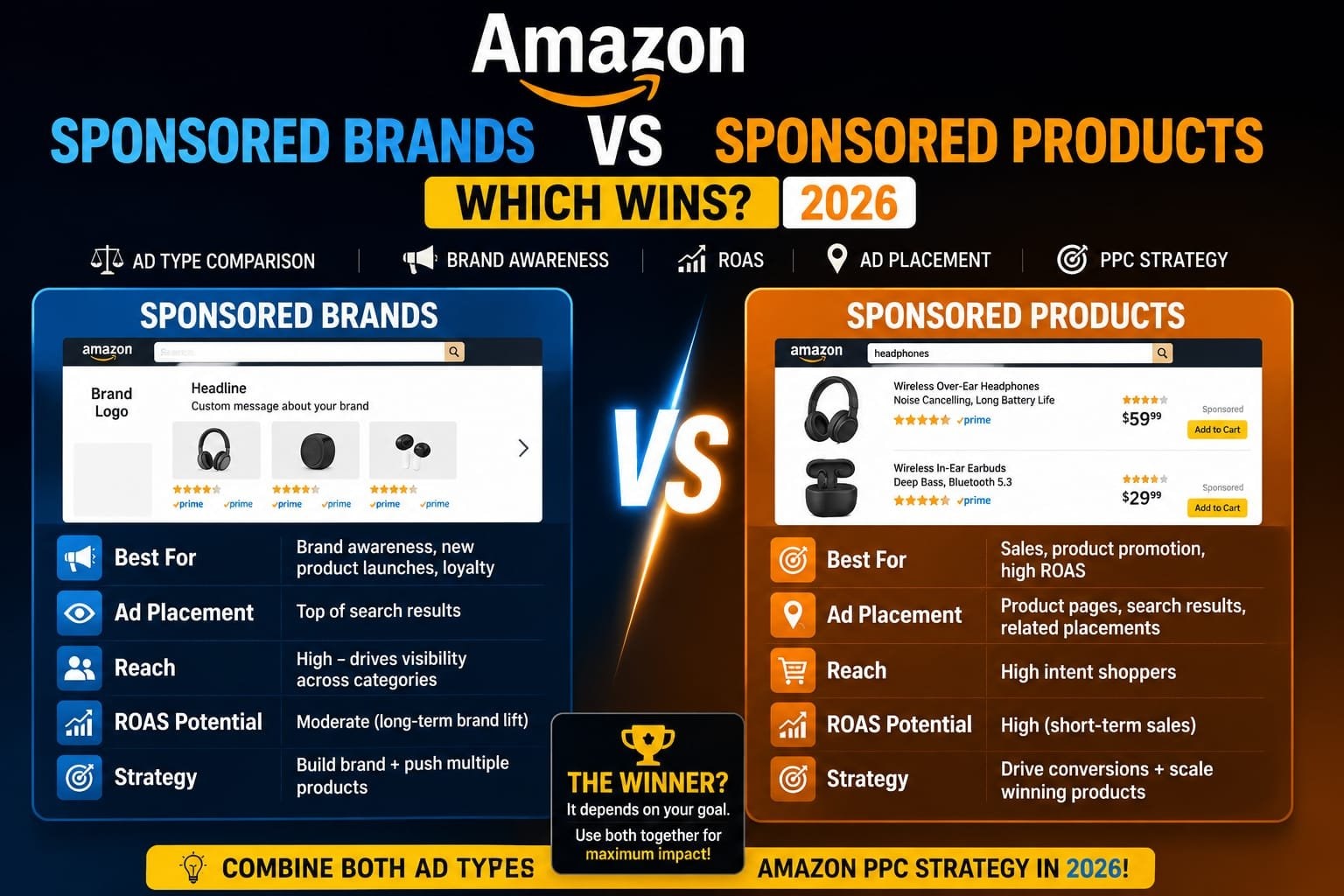
Use Sponsored Products when you need ASIN-level conversions and clearer spend-to-sales tracking. Use Sponsored Brands when you need brand presence at the top of search, multi-product storytelling, or Store traffic. Most mature accounts use both: SP for performance, SB for visibility and branded defense, with mix based on goals and data.
If you run Amazon PPC, the choice is rarely either-or. Understanding how each format works is the first step to allocating budget with intent. Related: Amazon PPC campaign structure, when to use Sponsored Display, and Amazon PPC management.
What are Sponsored Products?
Sponsored Products (SP) are cost-per-click ads that appear in search results and on product detail pages, styled alongside organic listings. They are the most common Amazon ad format for direct ASIN sales.
Typical strengths:
- Strong fit for individual ASIN visibility and sales velocity
- Clear path between spend and conversions
- Useful for new and established sellers
- Automatic and manual targeting options
- Often the first layer of a PPC program because of measurable performance
For many sellers, Sponsored Products are the foundation for capturing high-intent shoppers.
What are Sponsored Brands?
Sponsored Brands (SB), formerly Headline Search Ads, are creative-led placements that can show a brand logo, headline, and multiple products. Formats can include video and Store Spotlight, depending on eligibility and creative.
Typical strengths:
- Brand awareness and multi-ASIN storytelling
- Traffic to an Amazon Store or custom landing experience
- Premium search placement for brand and category defense
- Useful when launching a brand story or showcasing a product line
Sponsored Brands support recognition and branded search defense more than single-ASIN efficiency alone.
How to choose in 2026
Start with Sponsored Products if you are new to Amazon PPC or need efficient conversion data first. After listings convert and brand assets are ready, add Sponsored Brands to defend branded terms and grow awareness.
A practical starting mix for many accounts is a majority of budget on Sponsored Products for performance, with a smaller share on Sponsored Brands for visibility. Treat any ratio as a hypothesis to test against ACOS, TACoS, and brand goals, not a fixed rule.
| Goal | Lean first toward |
|---|---|
| ASIN sales and velocity | Sponsored Products |
| Brand and Store discovery | Sponsored Brands |
| Funnel coverage | Both, with clear KPIs per format |
Bottom line
Sponsored Products usually lead on conversion tracking and ASIN sales. Sponsored Brands lead on visibility and brand equity. Strong programs combine both rather than forcing a single winner.
Request a free Amazon audit from eCom Gliders to review SP/SB mix and wasted spend, or browse case studies.
About the author
Mary
Content Specialist
Mary writes practical Amazon seller guides covering PPC, SEO, listing optimization, and account management.
Keep reading


