
Key takeaways
- Amazon PPC optimization for FBA sellers
- Optimization pillars
- Metrics (no universal benchmarks)
Table of contents
Amazon PPC optimization for FBA sellers
Short answer: Amazon PPC optimization for FBA sellers means matching campaign structure, search-term hygiene, bids, and listing conversion to contribution margin - not chasing "secrets" that promise breakthrough sales. Related campaign-types primer: Amazon PPC strategies. Related durable architecture: evergreen Amazon PPC strategies. Related high spend triage: fix high ACoS on Amazon PPC. Related: Amazon PPC, free Amazon audit.
Official context: Amazon Ads - formats and auction rules should be confirmed.
Year labels in older titles (2025/2026) do not change fundamentals; marketplace settings still vary.
Ad-type map
| Type | Role |
|---|---|
| Sponsored Products | Core search and detail-page sales |
| Sponsored Brands | Brand presence when Brand Registry allows |
| Sponsored Display | Retargeting / audience reach |
| Amazon DSP | Optional advanced reach beyond basic Sponsored Ads |
Optimization pillars
- Keywords: branded defense, category, long-tail; refresh from search-term reports
- Negatives: cut irrelevant clicks
- Bids / placements: raise only where CVR supports cost
- Creatives / listing: CTR and conversion before scaling spend
- Budget: move spend from waste to proven segments gradually
PPC can support sales velocity that helps organic visibility; it does not guarantee rank.
Campaign setup
- Define objective: launch learning, profitability, or brand defense
- Choose auto for discovery and manual for control
- Structure portfolios → campaigns → ad groups cleanly
- Balance broad / phrase / exact; graduate winners to exact
- Bidding: down-only while learning; mix fixed/dynamic by role
Advanced controls
- Dayparting when hourly data supports it
- Placement modifiers after enough placement report data
- Voice-search and geo tactics are optional refinements, not defaults
- Creative tests on headlines/images where the format allows
Metrics (no universal benchmarks)
Track ACoS, TACOS, CTR, CVR, and ROAS together. Published "ACoS 15-25%" or "TACOS below 12%" tables are not verified targets for every category. Practice: set targets from your contribution margin, not blog averages.
Case stories that cut ACoS from 42% to 25% or grew sales 60% are unverified here - Not yet tested.
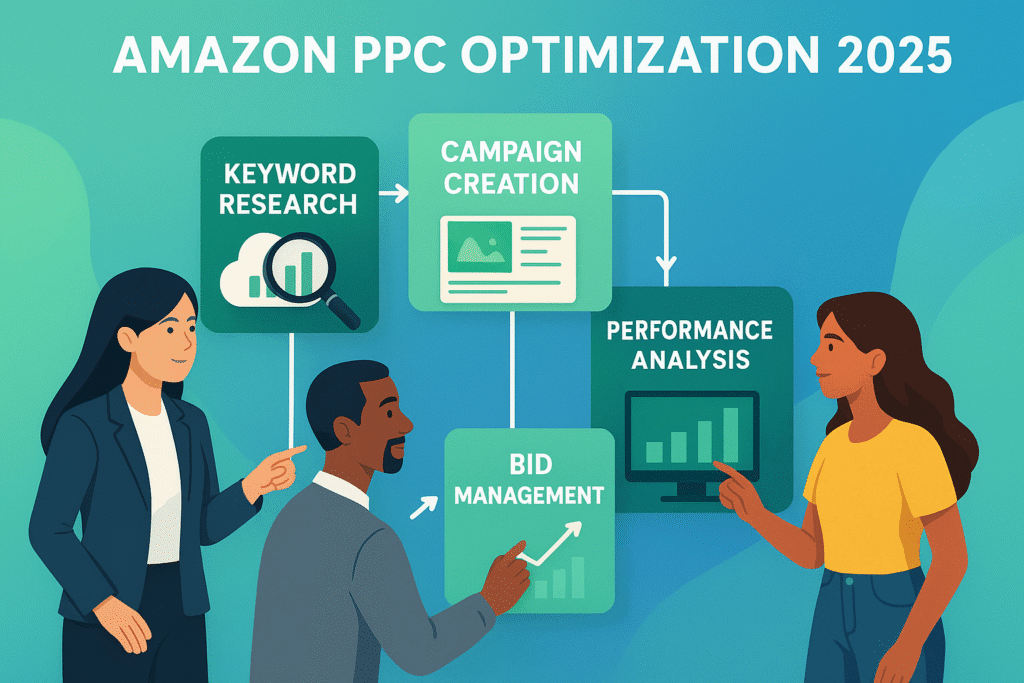
Stage checklist
| Stage | Focus |
|---|---|
| Launch | Discovery, learning budget, listing conversion first |
| Growth | Scale winners; add Brands/Display carefully |
| Mature | Brand defense; selective conquest; DSP only if capacity exists |
Mistakes
- No negatives
- Auto-only forever
- No creative or listing tests
- Optimizing ACoS while ignoring TACOS and margin
- Campaigns without a clear objective
AI / automation note
Bid and keyword automation can save time; human review gates still matter. "AI predicts competitors in real time" marketing is unverified.
Bottom line
Amazon PPC optimization is continuous hygiene and margin math, not a secret playbook. Treat "boost FBA sales" and invented benchmarks as unverified; refine structure weekly.
Request a free Amazon audit or contact eCom Gliders for Amazon PPC support.
About the author
Mary
Content Specialist
Mary writes practical Amazon seller guides covering PPC, SEO, listing optimization, and account management.
Keep reading


